
How to Renounce Korean Citizenship: Understanding the Choice Process and “Actual Center of Life” Standard
For dual citizens born abroad, the decision to renounce Korean nationality (국적이탈) is a significant legal milestone that shapes one’s future identity, career options, and legal obligations. Under the South Korean Nationality Act, this process is far more than a simple administrative notification or a paperwork exercise. It is a formal legal declaration that only takes effect when specific statutory requirements are substantively met and the Minister of Justice accepts the renunciation report. Among these requirements, the most critical — and frequently scrutinized — is the “Foreign Address” requirement. Pureum Law Office is here to clearly explain how this works and what to do if it relates to you.
Korean Nationality Act Article 14: Foreign Address Requirements Explained
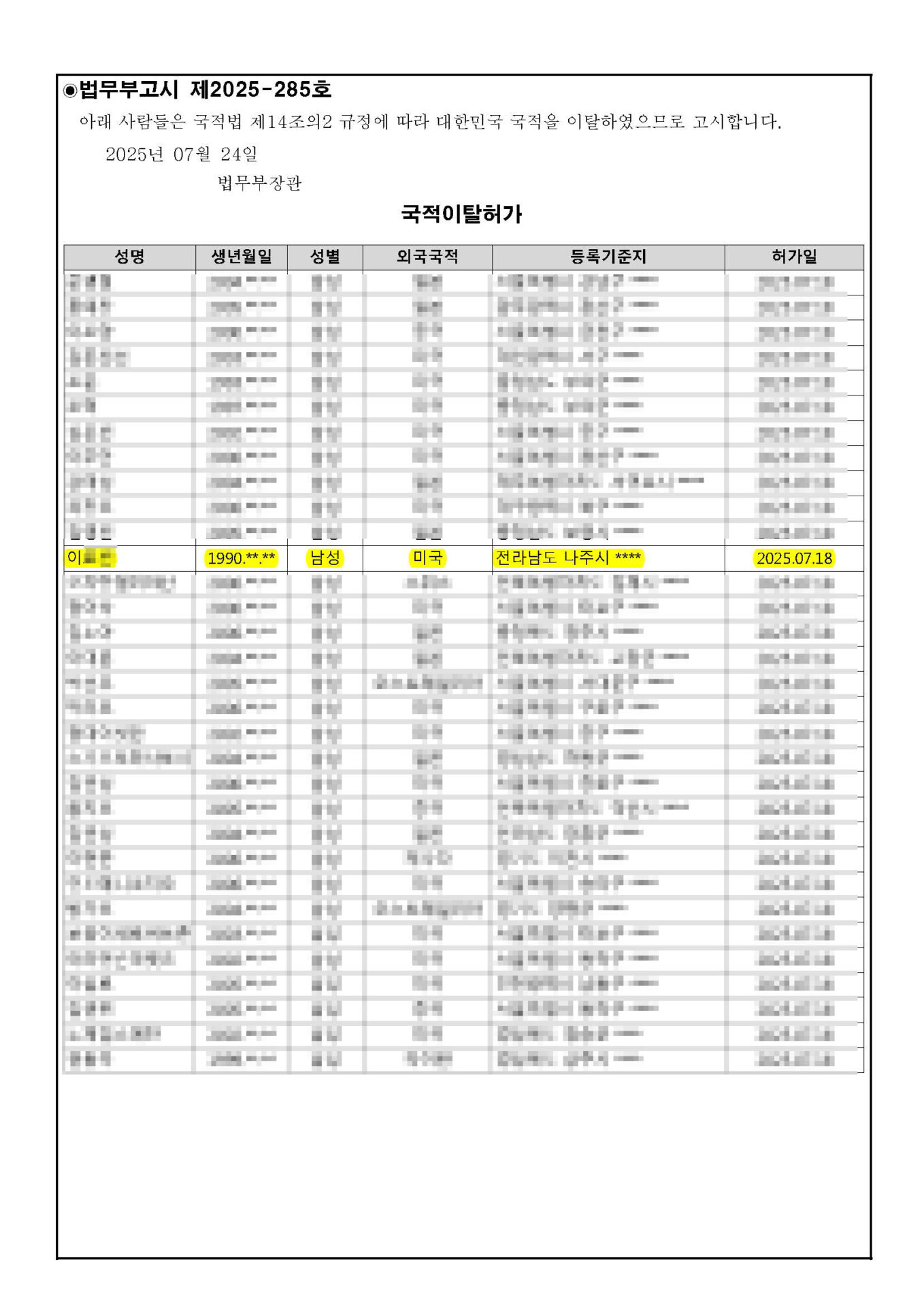
Article 14 of the Nationality Act stipulates that a dual national who wishes to choose a foreign nationality and renounce Korean nationality may do so “only when he or she has an address in a foreign country” through the head of a competent Korean diplomatic mission.
In practice, the Ministry of Justice and the Korean courts interpret this “address” through a rigorous legal lens. It is defined not as a mere registered domicile or a temporary mailing address, but as the Actual Center of Life (생활의 근거지) at the time of filing. Under this framework, renunciation is valid only when the applicant’s real living base is firmly established outside of South Korea. Recent court decisions have confirmed that if a genuine foreign living base is absent, the Ministry of Justice has no legal discretion to approve a renunciation application, regardless of other qualifications.
What is “Actual Center of Life” (생활의 근거지)? Key Standards for Korean Citizenship Renunciation
To determine whether an applicant truly resides abroad, Korean authorities apply three primary standards that prioritize the reality of the applicant’s life over formal documentation.
1. Substance Over Form: Proving Your Actual Living Base Abroad
The fundamental principle is that the reality of one’s daily life takes precedence over formal registration or the mere possession of a foreign passport.
- The Rootedness Principle: An address is legally defined as the place where an individual’s daily life is rooted. Authorities examine where the applicant actually eats, sleeps, attends school, and maintains social ties.
- Paper vs. Reality: Having a registered residence or a lease agreement in a foreign country is considered insufficient if the applicant’s actual daily activities—such as medical visits, schooling, and economic consumption—are consistently taking place within South Korea.
2. Residency Integrity Requirements: Stability and Continuity
The law seeks to distinguish between a legitimate long-term resident of a foreign country and an individual who is merely “visiting” abroad for the purpose of renouncing citizenship.
- Prohibition of “Strategic Visits”: A short-term stay abroad (e.g., several days or weeks) specifically timed to coincide with the filing of a renunciation report is generally not recognized as establishing an Actual Center of Life.
- Continuous Duration: There must be a reasonable and stable duration of stay. For instance, the courts have denied renunciation for applicants who spent seven years in Korea but stayed abroad for only 19 days just before filing.
3. Socio-Economic Anchor: Family and Education Factors
For younger dual citizens who are still dependents, the Actual Center of Life is often determined by the family’s socio-economic anchor.
- Household Unity: If the applicant’s primary providers (parents) live and work in Korea, the applicant is legally presumed to have their center of life in Korea.
- Educational Indicators: Attending school in Korea (including international schools) for a prolonged period is viewed as a strong objective indicator of a Korean living base. To overcome this, an applicant must prove their stay in Korea was strictly temporary.
Required Documents for Korean Nationality Renunciation
To successfully demonstrate that your Actual Center of Life is outside of Korea, you must provide objective, third-party documentation. Below is a comprehensive list of evidence typically required to support a renunciation report:
I. Residency and Travel Records
- Certificate of Entry & Exit (출입국사실증명서): This is the most vital document. It must show a pattern of long-term residence abroad and only temporary visits to Korea.
- Foreign Residency Documents: Valid permanent residency cards, long-term visas, or certificates of citizenship from the host country.
II. Educational and Professional Records
- Overseas School Transcripts and Enrollment Certificates: Proof of continuous education abroad (Elementary, Middle, High School, or University).
- Employment Verification: If applicable, a certificate of employment or business registration from the foreign country.
III. Family and Economic Anchor Records
- Parents’ Employment/Tax Records: Proof that the primary providers earn their income and pay taxes in the foreign country.
- Foreign Utility Bills & Lease Agreements: Monthly bills (electricity, water, internet) and long-term rental contracts or property deeds in the foreign country.
- Insurance Records: Proof of health or social insurance coverage in the host country.
IV. Evidence of Future Intent
- Acceptance Letters: Admission letters from foreign universities or firm job offers abroad.
- Professional Licenses: Documentation showing the need for foreign citizenship for specific careers (e.g., federal employment or security clearances).
Korean Military Service and Nationality Renunciation: March 31 Deadline for Male Dual Citizens
For male dual nationals, the Actual Center of Life standard is applied with even greater scrutiny due to mandatory military service.
- The March 31 Deadline: A renunciation report must generally be filed by March 31 of the year in which the individual turns 18 in actual age, not “Korean age”.
- The Risk of Rejection: Even if a report is filed before this deadline, it will be rejected if the applicant cannot prove their Actual Center of Life is abroad. A rejection issued after the March 31 deadline often results in the individual being unable to renounce their Korean citizenship until their military obligation is fulfilled.
Expert Legal Services for Korean Citizenship Renunciation
Given the strict statutory framework, nationality renunciation should be approached with proactive planning. A rejected report can have long-lasting effects on future career options in the public sector or security-sensitive positions abroad.
Pureum Law Office specializes in navigating these complex nationality cases. We provide a comprehensive legal audit of your residency history and organize your objective evidence to effectively demonstrate your Actual Center of Life to the Ministry of Justice. Get in touch with us today for any questions regarding renunciation of Korean nationality, and see our related articles: 1) [Success Story] Exceptional Renunciation of Korean Nationality ; 2) Special Renunciation of Korean Nationality ; and 3) Dual Citizenship in Korea.